Dual Pricing, Cash Discount, and Compliant Surcharge Training
← Back to Agent Portal
AGENT TRAINING
Dual Pricing & Cash Discount
Everything your agents need to know to explain, defend, and sell dual pricing with confidence. These are the exact objections you will face in the field — know the answers cold.
The Pricing Model Spectrum
COMMISSION INCREASES LEFT TO RIGHT
Where Each Model Sits
We earn 2–3x more on dual pricing and cash discount vs. traditional processing. Always lead with these models.
FROM TRADITIONAL TO ZERO-COST
Cost Plus
You absorb all fees. Standard residual.
→
Surcharging
Credit cards only. Halfway step. More restrictions.
→
Cash Discount
Card price listed. Cash gets a discount. 2–3x agent earnings.
→
Dual Pricing
Both prices posted upfront. 2–3x agent earnings.
⚠ We earn 2–3x more on dual pricing and cash discount. Always lead with these models when talking to merchants.
The Core Concept — Know the Difference
MODEL 1 — ZERO COST
Dual Pricing
Both the cash price and card price are displayed upfront before the customer pays. No surprise at checkout. Works on debit AND credit cards. This is a pricing model, not a fee.
Menu / signage shows:
Cash: $100.00 | Card: $104.00
Customer chooses before paying.
Works on debit AND credit.
Cash: $100.00 | Card: $104.00
Customer chooses before paying.
Works on debit AND credit.
MODEL 2 — ZERO COST
Cash Discounting
The higher card price is the listed/advertised price. The customer is offered a discount when they pay with cash. Same economics as dual pricing on the backend — different presentation. Feels like a reward, not a penalty.
Listed price: $104.00 (card price)
Cash discount offered: –$4.00
Cash price: $100.00
Same end result. Different framing.
Cash discount offered: –$4.00
Cash price: $100.00
Same end result. Different framing.
THE HALFWAY STEP
Compliant Credit Card Surcharging
A fee added at checkout on eligible credit card transactions only. Think of this as the halfway step between traditional cost-plus and full dual pricing. More restrictions, less profitable for agents.
Posted price: $100.00
Surcharge at checkout: +$3.00
Credit cards only.
Visa cap: 3% or actual cost, lower of the two.
Debit/prepaid: cannot be surcharged.
Surcharge at checkout: +$3.00
Credit cards only.
Visa cap: 3% or actual cost, lower of the two.
Debit/prepaid: cannot be surcharged.
IMPORTANT DISTINCTION
Dual Pricing vs. Cash Discounting
Same backend economics. The only difference is presentation. Dual pricing shows both prices. Cash discounting shows the card price and offers a cash discount. Both compliant when set up correctly.
Dual pricing: "Cash $100 / Card $104"
Cash discounting: "Price: $104 — pay cash, save $4"
Same money. Different customer experience.
Both work on debit AND credit.
Cash discounting: "Price: $104 — pay cash, save $4"
Same money. Different customer experience.
Both work on debit AND credit.
NEVER DO THIS
What Makes It Non-Compliant
Surcharging debit cards anywhere in the U.S. Adding fees not disclosed upfront. Operating in states where surcharging is prohibited. Posting prices one way and charging another. We set every merchant up correctly — this is why our setup process matters.
Prohibited surcharging states:
Connecticut, Massachusetts
Debit cards: Cannot be surcharged. Period.
Dual pricing on debit: ✓ Allowed (it's a posted price)
Connecticut, Massachusetts
Debit cards: Cannot be surcharged. Period.
Dual pricing on debit: ✓ Allowed (it's a posted price)
Compliance Rules — How We Set It Up Right
COMPLIANCE
We handle compliance for every merchant. Here is what proper setup requires.
Both prices posted upfront
Cash and card prices clearly visible before the transaction — on menus, signage, and at the register.
Clear, readable signage
Both prices must be legible and not designed to hide the card price. Clarity is compliance.
Debit covered under dual pricing
Unlike surcharging, dual pricing applies to all card types including debit — because it is a posted price, not a checkout fee.
No surprise fees at checkout
The amount charged must match what was displayed. Nothing gets added at the register that wasn't already disclosed.
Never surcharge debit cards
Surcharging debit is prohibited nationwide. Dual pricing is different — it's a pricing model. Know this distinction cold.
Know your state rules
Surcharging prohibited in CT and MA. Other states have strict disclosure rules. We confirm compliance for every setup.
The Math — Use This When Merchants Push Back
THE MATH
Every business is already paying 2–4% to accept cards. The only question is who absorbs it and how.
OPTION A — ABSORB IT
+2–4%
Business raises all prices to cover fees. Everyone pays more — including cash customers who don't create the fees. Cost is hidden.
OPTION B — DUAL PRICING
$0 to merchant
Cash customers pay the real price. Card customers pay a price that reflects the cost of acceptance. Transparent and only paid by those creating it.
THE WRITE-OFF MYTH
Still costs money
A write-off reduces taxable income — it doesn't eliminate the fee. A business paying $3,000/month in fees still pays ~$2,100 after the write-off. Confirm with their CPA.
REALITY CHECK
2–4% matters
For a restaurant on 10% margins, a 3% card fee is 30% of their profit margin on every card sale. This is not a rounding error.
Objection Handling — Real Answers to Real Pushback
Common Objection
"You can't charge extra on debit cards — that's illegal."
They're right about surcharging debit — but they're confusing two different things. A surcharge is a fee added at checkout on top of an advertised price, and yes, debit cards cannot be surcharged anywhere in the U.S. Dual pricing is different. Both prices are posted upfront — the customer sees the cash price and card price before they pay and chooses. That is a pricing model, not a surcharge. Visa treats them differently when set up and disclosed properly.
"You're right that debit cards can't be surcharged — that's an important distinction. What we set up is dual pricing, which is different. Both prices are displayed upfront so the customer knows before they pay. No fee gets added at checkout. That's why it's compliant on debit too."
Common Objection
"Credit card fees are a write-off. Just absorb them."
A write-off reduces your taxable income — it does not eliminate the cost. If a business pays $3,000/month in card fees, a write-off might save them $700–$900 in taxes. They are still paying over $2,000 out of pocket every month. The fee exists either way. The only question is whether it is built into everyone's prices or separated out based on how each customer pays.
"A write-off is great but it doesn't make the fee disappear — it just reduces taxable income. The business is still paying that 2–4% on every card transaction. We're just talking about two different ways to handle the same cost."
Common Objection
"This will annoy my customers and hurt my business."
It depends almost entirely on how it is presented. When done poorly — surprise fee at checkout, confusing signage — yes, it frustrates customers. When done correctly with both prices clearly posted upfront, most customers understand they are simply choosing how to pay. Implementation is everything. This is why we handle setup and signage for every merchant.
"It really comes down to how it's presented. When both prices are clearly posted upfront, most customers don't have an issue because they made the choice themselves. We set it up correctly and make sure the signage is clean and easy to read — that's the difference between complaints and no complaints."
Common Objection
"Visa considers dual pricing a surcharge."
Visa does not classify dual pricing / cash discounting as a surcharge when set up and disclosed properly. Surcharging has specific rules and caps (3% or actual cost, credit only, prohibited in some states). Dual pricing is a pricing model where both prices are posted before the transaction. They are treated differently under card network rules.
"Visa actually treats them differently as long as it's structured correctly. A surcharge is a fee added at checkout. Dual pricing is a posted price model where both options are shown upfront. That's why our setup process matters — we make sure it qualifies as dual pricing and not a surcharge."
Common Objection
"It's not right to charge customers extra for using a card."
The cost exists either way — the only question is who pays it and how transparently. When a business absorbs card fees and raises prices for everyone, cash customers end up subsidizing the card rewards and fees of card customers. Dual pricing separates the cost so only those who create it pay it. Neither approach is wrong — it is a business decision. But dual pricing is the more transparent of the two.
"Totally fair if it's not the right model for your business — we work with plenty of merchants on traditional pricing too. But consider that when fees get built into prices, cash customers pay for card rewards they don't benefit from. Dual pricing just separates it out so each customer pays based on how they choose to pay."
Common Objection
"We don't pass fees to customers. Anyone who does, we won't work with."
Completely fair — and we respect that. Dual pricing is not the right fit for every business. We work with plenty of merchants on traditional interchange plus pricing. Our goal is to educate and give options, not push one model. If they want traditional pricing, we compete on rate and will match or beat any competing offer. We also offer a free statement review and a $500 guarantee if we cannot match their current rate.
"Totally fair — a lot of businesses prefer to keep things simple and build the cost into their pricing. We work with plenty of merchants that way too. We'd love to do a free review of your current statement. We match or beat any rate, and if we can't, we'll give you $500. No pressure, just a second set of eyes."
Common Objection
"I'm always charged extra on my debit card — that's illegal."
If that happened, the merchant was not set up correctly. A compliant dual pricing program shows both prices before payment — you see the card price before you swipe, not after. That is different from a surprise fee added to a debit transaction at checkout. The complaint is valid about bad setups — not about compliant dual pricing.
"If that happened, it sounds like it wasn't set up correctly. A compliant dual pricing program shows both prices upfront — you see the card price before you pay, not after. When it's done right, there's no surprise. That's exactly why we handle setup and signage for every merchant."
Quick Reference — Know This Cold
WHAT EVERY AGENT NEEDS TO KNOW BEFORE EVERY CALL
✓Dual pricing = both prices posted upfront. Surcharging = fee added at checkout. They are different and treated differently by Visa.
✓Dual pricing and cash discounting are the same on the backend — different in presentation. Dual pricing shows both prices. Cash discounting shows the card price and offers a cash discount.
✓Debit cards cannot be surcharged — but they CAN be part of a dual pricing model because the card price is a disclosed posted price, not a checkout fee.
✓Visa caps compliant credit card surcharges at 3% or actual cost (whichever is lower). Dual pricing has no such cap — it is a pricing model, not a surcharge.
✓Surcharging is prohibited in Connecticut and Massachusetts. Dual pricing rules differ — always confirm setup is correct for the merchant's state.
✓A write-off reduces taxable income. It does not eliminate the processing fee. The business still pays 2–4% on every card transaction.
✓Processing fees exist whether the merchant uses dual pricing or not. The only choice is who absorbs them and how transparently.
✓We earn 2–3x more on dual pricing and cash discount vs. traditional processing. Always lead with these models. Surcharging is the halfway step.
✓Presentation determines whether it works. Clearly posted prices = happy customers. Surprise fees at checkout = complaints. We set it up right every time.
✓When a merchant says no to dual pricing, pivot to traditional pricing and offer a free statement review. We match or beat any rate. $500 guarantee if we can't.
What Our Clients Are Saying...
The Highest Google Rated Payment Solutions Team in Tampa Bay
Get in Touch With Our Tampa Payment Processing Team
Call/Text : (727) 732-3292
Email: [email protected]
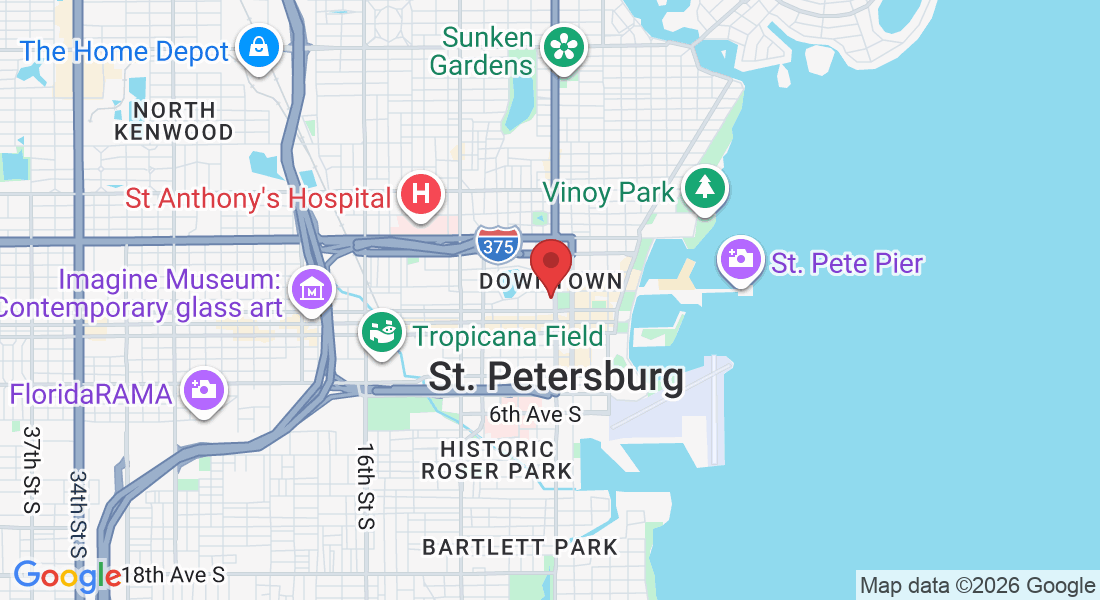
Address: 136 4th St N, Suite 223, St Petersburg, FL 33701
Hours: Mon-Friday 10:00 a.m. – 7:00 p.m.
* By Appointment Only *